Mental health awareness in Pakistan is crucial as depression, anxiety, and stigma rise. Learn key challenges and effective solutions for better wellbeing.
Pakistan needs to cultivate mental health awareness as a matter of priority. Recent statistics within the last decade in Pakistan indicate a growing psychological distress burden in the form of depression and anxiety in numerous communities. The psychological health system remains rudimentary. Silence, suffering, and a lack of help for many families is the result of debilitating cultural stigmas and inadequate service provision. However, the quickest outcomes in psychological health crises can be achieved through the implementation of effective public education and mental health programs.
The purpose of this initiative is to use current data to present the situation to mental health advocates in the prevention of the social stigma, service shortage, and provide mental health awareness in Pakistan. Wherever you are in the community whether it be a parent, teacher, student, or community leader, you can help enhance the mental health of the population.
Why Mental Health Awareness in Pakistan Matters. Mental medical conditions such as depression and anxiety puts strain on family dynamics, performance in school, and productivity in work. Pakistan under addresses and under estimates these issues, as reported by Health Canada states that Pakistan has one of the highest proportions of people with depression and anxiety. Disproportionately, the country spends only 0.4% of their overall health care budget on mental health, paired with 0.81 psychiatrist per 100,000 individuals in the country. Why this matters: untreated mental illness increases the risk of poor school performance, job loss, relationship breakdown, and in severe cases, self-harm.
The facts — prevalence, suicide, and workforce gaps
There are many different interdisciplinary research studies which detail the high frequency rates of depressive and anxiety disorders that individuals in Pakistan face. Community studies demonstrate that depressive and anxiety disorders have increased prevalence rates in the range of 20% to 50% in certain demographic sections of the population, mainly in the youth and trauma-affected groups.
BMJ Open
Suicide and self-harm are serious public health issues that are not reported to the extent that they should be and need to be. Deaths and suicide attempts that require surveillance and prevention are more incumbered than many recent studies have concluded.
PMC
There is a severe shortage of mental health care in Pakistan, with many estimates having less than 0.2 psychiatrists per population of 100,000 and virtually no community mental health services in areas outside of major urban centers. Hence, the counseling and psychiatric care in these areas is virtually non-existent for the vast majority of the population.
Frontiers
Main barriers to improving awareness and care
Stigma and cultural beliefs
Culturally, mental illness is interpreted as either a sign of disintegration of family values or disgrace; in many instances, mental illness is seen as a sign of lack of or weakness of faith, which cannot be helped. Stigma, therefore, prevents open discourse. Consequently, care is delayed.
Absence of Qualified Specialists and Services
In numerous regions, there is a considerable scarcity of psychologists, psychiatrists, and licensed counselors. This is particularly true for rural areas.
Absence of Focused Public Political Funding and Policy
Mental health is given a fraction of the resources allocated for health, and there is an absence of national initiatives pertaining to advocacy and mental health in schools.
World Health Organization
Lack of Improved Data and Surveillance
There is insufficient reporting and analysis, which makes it very difficult to assess the situation and determine what measures should be taken.
Actionable Approaches to Augment Mental Health Advocacy in Pakistan
The following are pragmatic and data-driven steps that can be taken at the community, school, and policy-making levels.
1. Public Education Initiatives at the National and Community Scales
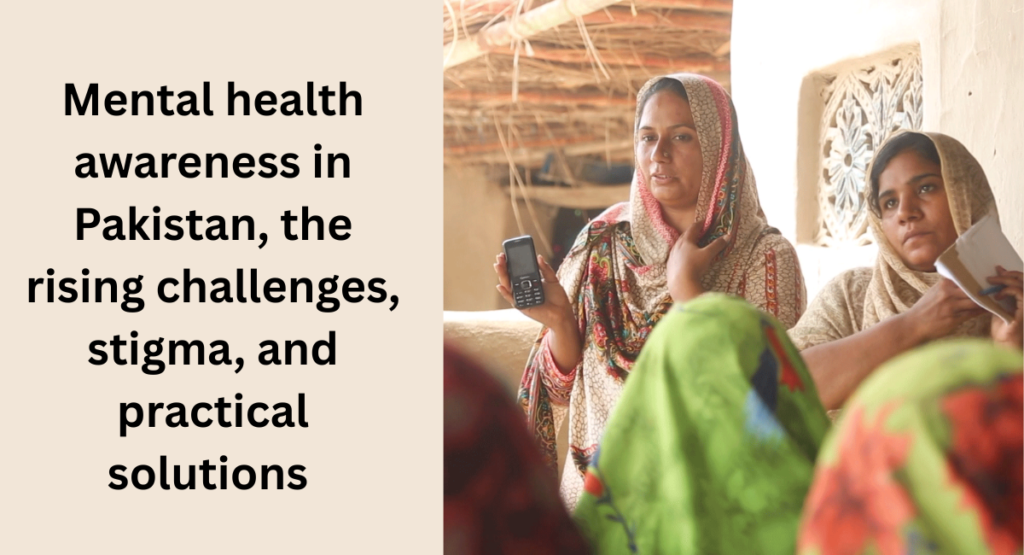
Depression and anxiety, along with sources of help, should be publicized via community radio, television, social media, and local mosques. Campaigns that utilize local characters and narratives are far more effective in stigma reduction than campaigns that rely on abstract frameworks. (Refer to WHO and local NGO initiatives for guidance).
2. Provide Mental Health First Aid Training to School Teachers and University Instructors
Teachers are the first line of detection for indicators of mental distress among the youth. They should undergo short, practical training on the mental health warning signs and on how to
Referral services have the potential to safeguard and improve educational outcomes for students.
3. Increase the availability of counselling services and telephone helplines
The implementation of telephone counselling services to remote and underserved regions offers evidence-based methods of providing anxiety and depression symptom remote symptom counselling.
4. Include mental health care within primary health care
With the inclusion of screening for depression and anxiety within the training of primary health care physicians and nurses, early identification and treatment of a greater number of individuals can be achieved.
5. Community peer-support groups
Safe groups, such as youth, mothers, and club communities, can create spaces to connect, share, and avoid the experience of isolation.
6. Use schools for resilience programs
Programs that teach emotional regulation, and coping skills improve academic performance.
What families and individuals can do today
Learning and recognizing the signs of depression and anxiety—which can include fluctuations in sleep patterns, appetite changes, fluctuating energy levels, and shifts in mood.
Use gentle, empathetic language of observation to encourage discussion: ”You seem different. Do you want to talk?”
Stress the importance of a healthy daily routine that includes sleep, a balanced diet, exercise, and limited screen time, especially at night, to enhance mental resilience.
Keep a list of local resources, such as your nearest health clinic, mental health helplines, and trusted Non-Governmental Organizations (NGOs).
Handle self-harming emergencies like medical emergencies. Call emergency services or crisis hotlines.
H2: Tracking success: how we measure our growing awareness
Key indicators to monitor overtime:
- New help-seeking behaviors (clinic visit, helpline call)
- An increase in the number of trained teachers/health care workers per district
- Surveyed stigma reduction (change in attitudes by the public)
- Improvements in policy: increase in the share of the mental health budget, more convergence with primary health care
Research & evidence (few selected)
These recommendations were constructed primarily from the latest research and public reports. Most relevant sources were:
- WHO Mental Health Atlas — Pakistan profile — Country resources and financing.
- World Health Organization
- Frontiers in Health Services — Analysis of the gaps in the Pakistan’s workforce and the 24 million estimated to be in need of care.
- BMJ Open / community prevalence reviews — Depression and anxiety prevalence in multiple samples from Pakistan.
- Regional analyses & commentary on the Lancet — suicide patterns and policy recommendations.
- Recent PMC research on the psychological burden and coping strategies of the Pakistani adult population.
Conclusion & summary
The challenge of mental health awareness in Pakistan is overwhelming, yet achievable.
The gaps in mental health service in the country include very high levels of stigma as well as high levels of anxiety and depression, but, if we mobilize and sensitize the population, we will bring change in a matter of months with established, practical, and evidence-based solutions with mental health integration in primary care, distance counselling, public education, and school training. Policymakers, families, and communities need to work together to normalize help-seeking, to expand the access to care, and to prioritize prevention. If we work to build awareness today, we will build the foundation for suffering to decrease tomorrow with new families formed, communities healed, and students made more resilient.
FAQS
Q1: What means by mental health awareness?
Mental health awareness means understanding potential mental illnesses (e.g. anxiety and depression), knowing how to identify the signs, understanding the process of help, and being able to do so without stigma which often gets in the way of care being accessed.
Q2: How prevalent are mental health conditions in Pakistan?
Research indicates significant rates of both depression and anxiety in adults and young people; community prevalence surveys in these populations range from 20-50\%, indicating a large lack of resources in public health.
Q3: Where in Pakistan may one find assistance?
A primary care physician, a registered counselor, and tele-counseling programs are all ideal starting points. Have a backup emergency contact in case of immediate risk, and use local NGO hotlines or psychiatric emergency rooms if available.
Q4: In what ways can educational institutions contribute to mental health awareness?
Enabling educators to detect early warning signs, implementing social emotional learning programs, and establishing referral systems to counselors are all effective measures to alleviate stigma, and enhance the mental health of students.
Q5: Are mental health conditions curable?
Definitely. The majority of mental health can be treated with psychotherapy with a counselor, supportive mental health counseling, changes to overall health routines, and at times, medication if the condition is caught early enough.